In a significant ruling on transnational family law, the Delhi High Court dismissed an appeal in a cross-border matrimonial dispute, reinforcing the principles of ‘comity of courts’ and ‘forum conveniens’. The case, *MAT.APP.(F.C.) 365/2023*, involved a complex jurisdictional battle between Indian and Canadian courts in the divorce proceedings of an Indian-origin couple holding Canadian permanent residency.
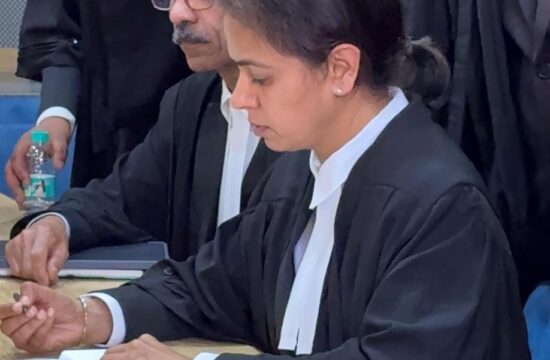
The appellant, Damini Manchanda, challenged a Family Court order that refused to restrain her husband, Avinash Bhambhani, from pursuing a divorce petition in Canada. Represented by Ms. Preeti Singh of PS Law Advocates & Solicitors, the appellant argued that Indian courts should retain jurisdiction, citing the parties’ Indian citizenship and the potential for more comprehensive relief under Indian matrimonial laws
However, the Division Bench of Justice V. Kameswar Rao and Justice Anoop Kumar Mendiratta upheld the Family Court’s decision. The Court observed, “None of the parties are currently residing in India. The doctrine of forum conveniens… would make it clear that the Court in Canada is the appropriate and convenient forum for the parties to pursue their reliefs.” This observation was crucial, as both parties had established their lives and permanent residency in Canada.
The High Court’s decision was heavily influenced by the Supreme Court’s guidelines in Modi Entertainment Network v. W.S.G. Cricket Pte. Ltd. The judgment meticulously applied these principles, noting that an anti-suit injunction is a discretionary remedy. The Court must consider whether the defendant is amenable to its jurisdiction, whether refusal would cause grave prejudice, and most importantly, must respect the principle of comity by giving due deference to the foreign court where proceedings are already underway.
The Bench found that the appellant failed to demonstrate that pursuing the case in Canada would be oppressive or that the Canadian court was not a competent and convenient forum. Simply put, the availability of different legal remedies in India was not a sufficient ground to restrain proceedings in the country where the parties actually resided.
For More Details, click here
If you’re seeking the best divorce lawyer in Gurgaon, look no further than PS Laws. Our team is here to provide you with expert legal representation and unwavering support during this pivotal time.
PS Law Advocates & Solicitors (Preeti Singh & Associates)
Phone: [+91 93124 11311]
Email: [info@pslaw.co.in]
Website: [https://pslaw.co.in/]
PS Laws—where expertise meets compassion. Contact us today to schedule a consultation and take the first step toward a new beginning.